
.png)
.png)
.png)
.png)










The answer is rarely a number. It's a set of conditions.
A treadmill doesn't fail because a calendar says it's time. It fails because thousands of workouts, varying user loads, environmental stress, and inconsistent maintenance eventually compound into a performance problem. The same principle applies across every category of commercial gym equipment.
That same treadmill might reach the end of its service life after seven years in a high-traffic gym running 16 hours a day. In a lightly used corporate wellness center, it could keep performing well beyond a decade. Selectorized strength equipment, with fewer moving parts and consistent upkeep, can often outlast multiple rounds of facility renovation. The machine doesn't change. The conditions do.
For gym owners, developers, procurement managers, and facility operators, the more useful question was never how long gym equipment lasts, it's how long it lasts under your conditions with your level of investment in maintaining it.
This guide breaks down industry lifespan benchmarks by equipment category and the five variables that actually determine how long your equipment performs, including maintenance practices that protect your investment.
Key Takeaways
-
Commercial gym equipment lifespan is determined by conditions, not just age. Cardio equipment typically lasts 7–10 years in commercial settings. Strength and functional training equipment can perform well beyond a decade with consistent maintenance.
-
Usage volume, maintenance consistency, user demographics, environmental conditions, and build quality determine equipment lifespan and long-term ROI.
-
Commercial-grade equipment with stronger build quality and deeper warranty coverage delivers a lower cost per year than budget alternatives with shorter replacement cycles.
What Is The Average Lifespan of Commercial Gym Equipment?
While every facility operates differently, industry benchmarks provide a useful starting point for planning around the typical lifespan of commercial gym equipment.
|
EQUIPMENT CATEGORY |
TYPICAL LIFESPAN |
|
Commercial Treadmill |
7-10 years |
|
Commercial Elliptical |
7-10 years |
|
Commercial Exercise Bikes |
7-10 years |
|
Selectorized Strength Equipment |
10-15+ years |
|
Functional Training Systems |
15-20+ years |
|
Dumbbells & Free Weights |
20+ years |
|
Power Racks & Benches |
20+ years |
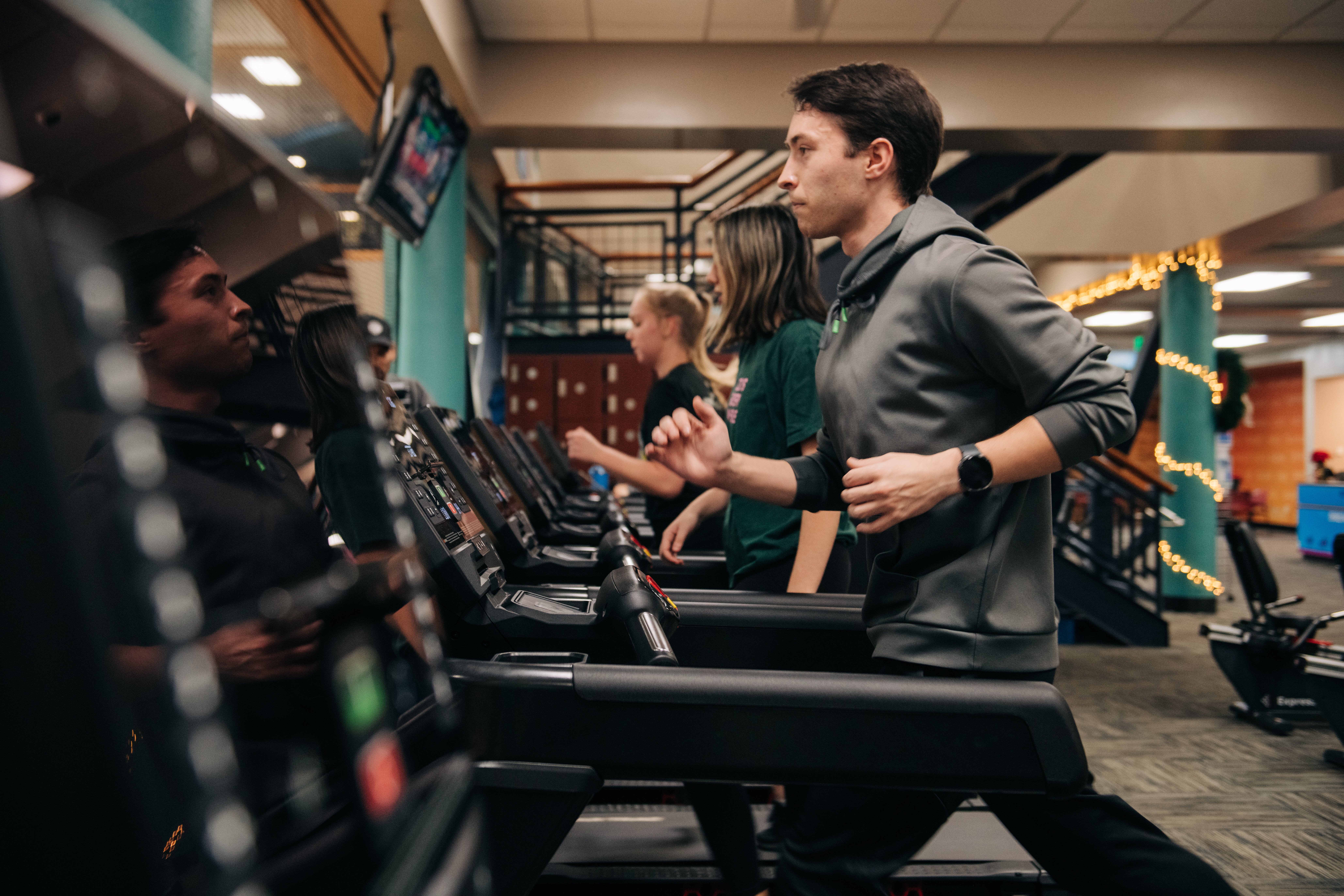
Not all equipment ages at the same rate, and the gap comes down to how each category is used. Cardio equipment absorbs more continuous demand than any other category on the floor. A treadmill belt, drive system, and electronic components are under load every session —making them inherently more prone to wear than the welded steel frame of a strength machine that may see a fraction of that usage volume,
The lifespan of commercial gym equipment is rarely determined by a single failure point. It’s the cumulative result of maintenance consistency, usage intensity, build quality, and how well the equipment was matched to the environment it was placed in.
The Five Factors That Determine How Long Commercial Gym Equipment Lasts
Two facilities running identical machines can experience dramatically different outcomes. The equipment doesn’t change, but how it’s managed does.
Usage Volume
Usage volume is one of the strongest predictors of equipment lifespan. A treadmill supporting 50 users a day faces fundamentally different demands than one in a hotel fitness center logging a handful of daily sessions.
High-traffic commercial gyms accelerate wear on belts, bearings, cables, and electronic systems. Equipment can perform well under heavy use, but higher utilization requires more frequent maintenance intervals and earlier component replacement. Matching equipment to anticipated usage during the planning phase, rather than after installation, is one of the most effective ways to protect long-term performance.
Maintenance Consistency
Consistent maintenance extends equipment life more effectively than almost any other parts of operational decision. Routine inspections catch issues before they become costly repairs. Regular lubrication reduces friction on moving parts. Cleaning schedules prevent dust and debris from compromising motors, electronics, and mechanical assemblies.
Facilities that treat preventative maintenance as a core operational practice experience fewer breakdowns, lower repair costs, and more predictable replacement cycles.
User Demographics
Not every facility serves the same population, and the difference shows over time. Gyms supporting athletic training or large general membership bases place different demands on equipment than boutique studios or hospitality fitness centers.
User weight variance, workout intensity, and session frequency all influence how quickly components wear. This is where commercial-grade engineering earns its value —equipment built to accommodate a broad range of users under sustained demand holds up where lighter-duty alternatives won't.
.jpg?width=1920&height=1281&name=23923174.jpeg_large%20(1).jpg)
Environmental Conditions
The environment surrounding the equipment is a factor many operators underestimate.1 Humidity accelerates corrosion. Dust accumulation affects motors and mechanical systems. Temperature fluctuations put stress on components over time.
Facilities near pools, in coastal climates, or in regions with significant humidity swings often require more frequent inspection cycles to preserve equipment durability. The machines may be identical to those in a controlled indoor environment but the maintenance strategy shouldn't be.
Product Tier and Build Quality
Two machines can look similar on a showroom floor and deliver completely different ownership experiences over the following decade. Build quality determines everything from structural integrity to how serviceable the equipment remains years into its life.
Frame construction, weld quality, component engineering, and parts availability all contribute to long-term reliability. High-quality commercial equipment is designed with maintenance in mind. Components can be accessed and replaced efficiently, keeping machines on the floor rather than heading toward premature retirement.
That's the difference between equipment built for commercial settings and equipment simply placed inside them.
The Cost of Cheap: Why Build Is the Real Metric
Many procurement decisions begin with a single comparison: which option costs less today?
The more useful question to ask is which option costs less over ten years.
A lower-priced treadmill may look compelling on a purchase order. But if it requires full replacement after three or four years, the math shifts quickly and decisively compared to a commercial-grade machine with a lasting performance of a decade or more.
When you multiply that gap across an entire equipment floor, the difference between a budget procurement strategy and a quality-first one can represent hundreds of thousands of dollars over the life of a facility.
The true cost of ownership extends well beyond the initial invoice. It includes maintenance labor, replacement parts, equipment downtime, member experience disruption, and the operational costs of unplanned capital expenditure. Budget equipment tends to compress that timeline —more failures, more repairs, and earlier replacement cycles that rarely align with planned budget windows.
This is where durability stops being a product feature and becomes a business strategy.
Built to Be Serviced, Not Just Built to Last
Longevity isn't only about how a machine is constructed. It's about how easily it can be maintained over time. Equipment that is difficult to service gets serviced less — and that gap compounds into accelerated wear, more frequent breakdowns, and shorter useful life.
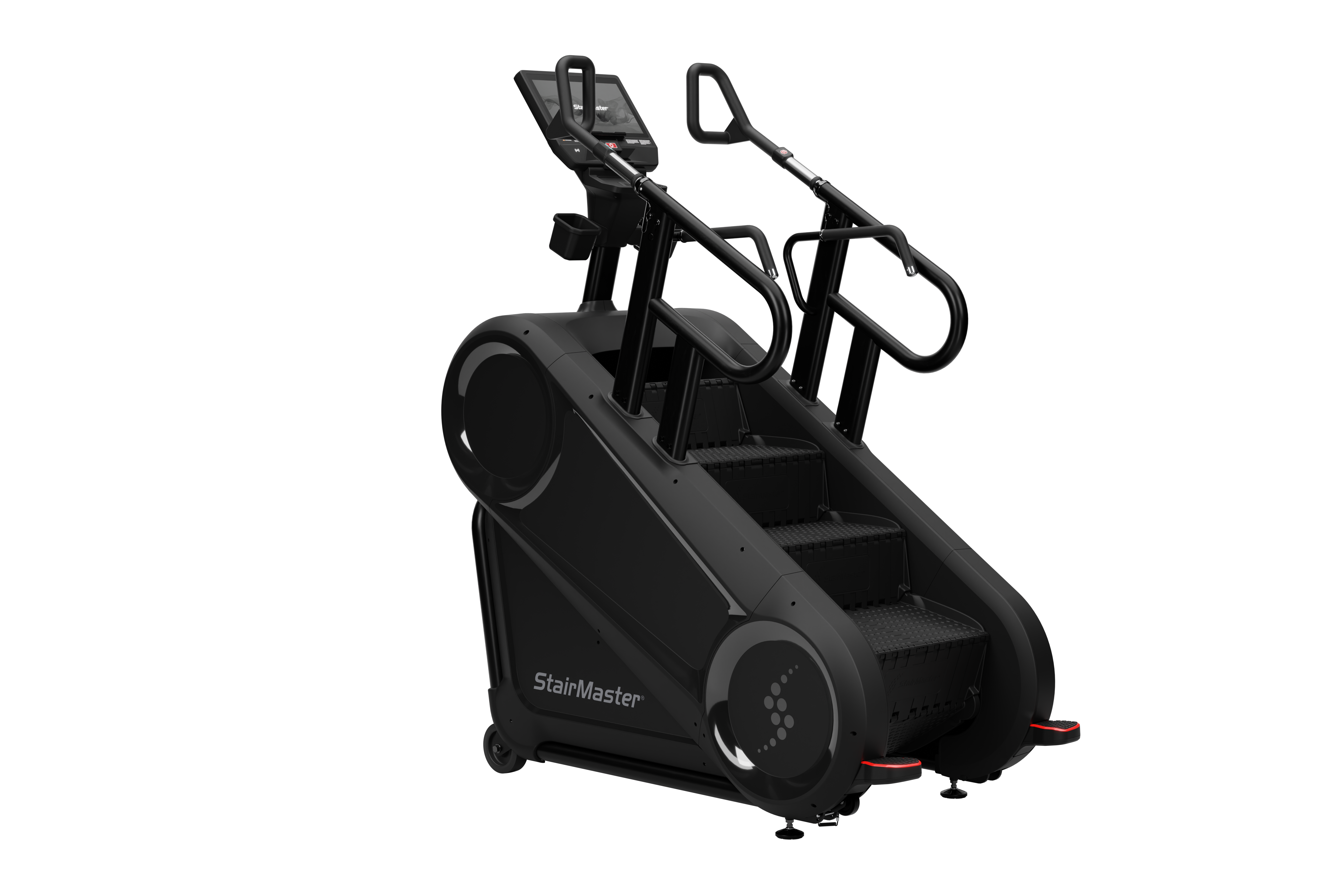
Core Health & Fitness designs with that reality in mind. The StairMaster 10G is a clear example of this philosophy in action. Developed with direct input from service technicians and operators worldwide, the 10G was engineered from the ground up with serviceability as a core design requirement —not an afterthought. Access points for high-frequency maintenance areas were repositioned to reduce service time and minimize wear caused by deferred upkeep. The result is a machine that stays on the floor longer, runs quieter across the facility, and introduces user-facing innovations like OverDrive technology without sacrificing the operational reliability operators depend on. The 8GX and 4G that followed were built on the same foundation.
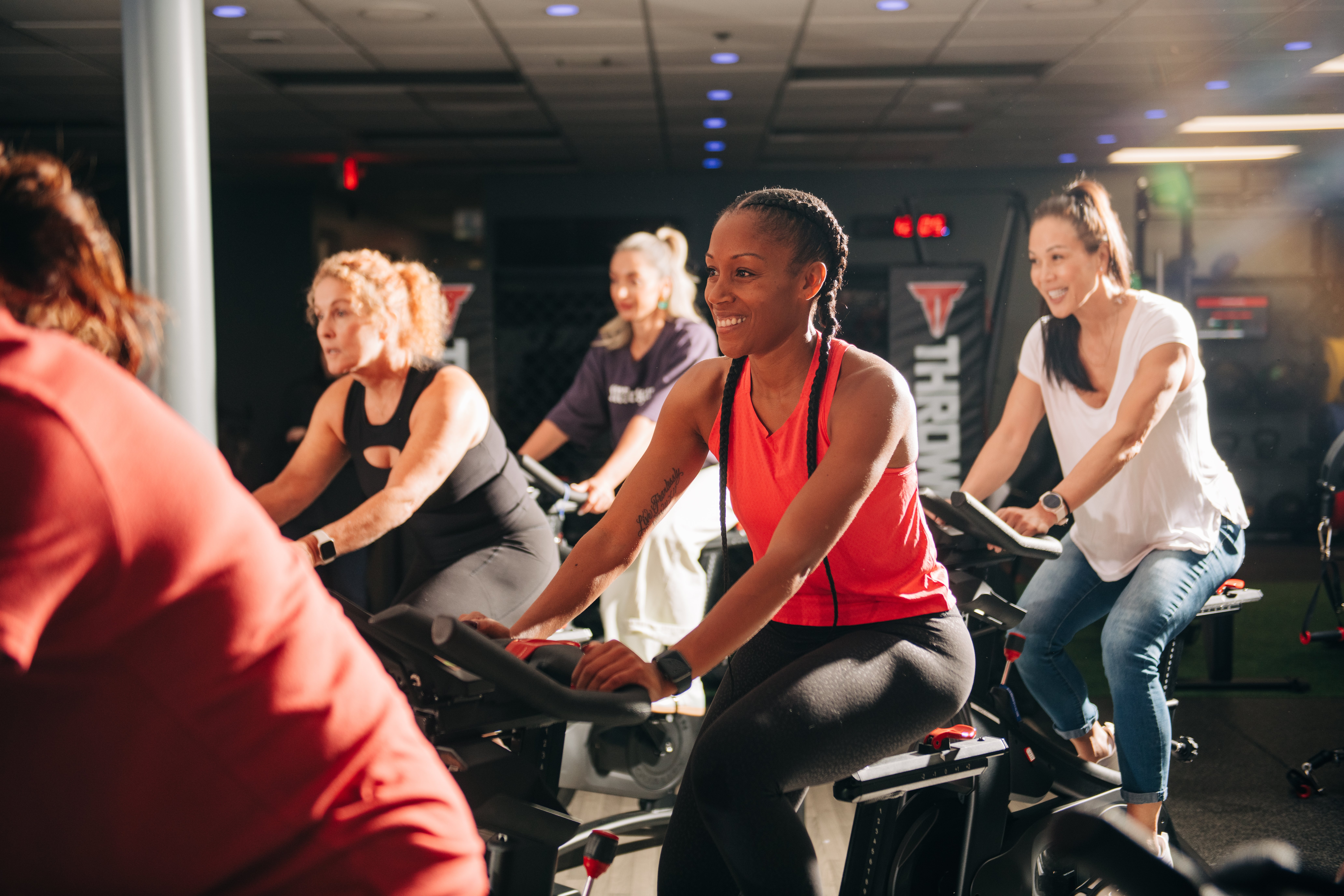
In a group cycling studio, the same thinking is built into the Schwinn Aetherion bike. Calibration time is an easily overlooked operational cost. But for facilities managing a full floor of bikes, it accumulates. The Aetherion's direct Ion Power Meter reduces setup from several minutes per bike to near-instant readiness, eliminating Bluetooth pairing, battery replacements, and manual calibration entirely. Self-extracting crank bolts remove the need for specialized tools, and standardized hardware sizing means service teams work faster across every unit.
Less friction in the maintenance process means maintenance actually happens on schedule —and that consistency is what turns a well-built machine into a long-lived one.
Warranty Depth as a Sign of Equipment Confidence
A manufacturer’s warranty is more than a contractual protection. It’s a signal of how much confidence the builder has in what they made.
Core Health & Fitness backs its commercial equipment with warranties that reflect that, covering structural frames, major mechanical components and wear items across categories from cardio to strength to functional training. The depth and structure of those warranties varies by the product line and usage tier, but the underlying standard is consistent: equipment designed for commercial environments should be supported like it.
The strongest equipment investments are rarely defined by their purchase price. They're defined by the value they keep generating on the floor, in daily performance, and in the member experience, years after installation.
Maintenance Schedules That Protect Your Investment
Even the most durable commercial gym equipment requires consistent attention. The goal of the maintenance isn’t simply preventing breakdowns —it’s maximizing service life while preserving performance, safety, and member experience.
|
MAINTENANCE SCHEDULE |
|||
|
Daily |
Weekly |
Monthly |
Quarterly |
|
Clean surfaces and remove sweat and debris |
Inspect moving parts and tighten loose hardware |
Lubricate per manufacturer recommendations |
Conduct comprehensive structural inspections |
|
Verify console functionality and emergency stop systems |
Check cable condition and integrity |
Inspect upholstery for wear or deterioration |
Tighten structural fasteners and evaluate wear patterns |
|
Listen for unusual sounds during operation |
Verify belt alignment on cardio equipment |
Examine belts and cables for fraying or wear |
Replace aging components before failure occurs |
|
Examine pedals and contact points |
Review overall equipment performance |
Review maintenance records and service trends |
|
Facilities that achieve the longest equipment lifespan are rarely those spending the most on repairs.2 They’re the ones preventing problems before they even surface.
When to Repair, Replace, or Upgrade
Not every performance issue signals the end of a machine’s useful life. A worn treadmill belt, frayed cable, or damaged upholstery panel is a maintenance event, not a replacement trigger.
Repair is typically the right call when:
-
The frame remains structurally sound
-
Replacement parts are readily available
-
Repair costs are reasonable relative to the equipment’s remaining value
-
Performance and safety standards are still being met
Replacement becomes the stronger decision when:
-
Recurring failures are creating persistent downtime
-
Parts availability are declining
-
Cumulative repair costs are approaching the value of a new unit
-
The equipment can no longer be serviced effectively
A third consideration that often goes unasked: does the equipment still support the experience members expect?
Fitness technology has advanced significantly and member expectations have followed.3 Modern equipment that offers connectivity, integrated training experiences, and digital capabilities gives facilities a meaningful edge —delivering the experience today’s gym members increasingly expect and return for. In those cases, an upgrade isn’t just a replacement decision. It’s a long-term investment in member satisfaction and facility relevance.
Invest Once. Perform for Years.
The lifespan of commercial gym equipment isn't measured only in years. It's measured in reliability, performance, member satisfaction, and the return on every dollar invested in the floor.
For gym owners, developers, and procurement teams, the goal was never simply finding the least expensive option available today. It was finding equipment capable of delivering the greatest long-term value —because in commercial fitness, the cheapest equipment is almost never the least expensive over time.
Core Health & Fitness partners with operators, developers, and facility designers to make that investment work harder and last longer. From equipment selection and lifecycle planning to serviceability and ongoing support, the work doesn't stop at installation. It's built to perform well beyond it.
Citations
1Lucas Riphagen, TriActiveUSA, September 9, 2025, https://triactiveusa.com/blog/can-i-leave-my-gym-equipment-outside/
2Cory McKane, WeStrive, September 22, 2023, Gym Maintenance 101: Keeping Your Equipment in Top Shape,https://www.westrive.com/blog/gym-maintenance-101-3-tips-for-keeping-your-fitness-equipment-in-top-shape
3Perfect Gym, n.d., How Often Do Gyms Replace Equipment? A Guide for Gym Owners and Managers,
https://www.perfectgym.com/en/blog/club-owners/how-often-do-gyms-replace-equipment