
.png)
.png)
.png)
.png)










How Star Trac Built the Standard for Commercial Cardio and Why It Still Sets It
"The machine doesn't lie. Neither does the floor it's built for."
That's the quiet truth behind Star Trac. Not a flashy origin story. Not a single eureka moment. Just a relentless commitment to building equipment worthy of the most demanding commercial environments in the world, health clubs, corporate wellness rooms, hotel gyms, and university fitness centers, and refusing to make anything that couldn't handle what those places asked of it.
For more than four decades, Star Trac has operated by a simple principle: design for the people who use machines the hardest and let everything else follow. That standard, established in 1979 and refined through every product launch, partnership, and industry shift since, is the reason Star Trac is still on the floors of the world's best fitness facilities today.
The Origin: Born Commercial, Staying Commercial
Star Trac didn't begin as a consumer brand trying to break into gyms. It began inside them.
Founded in 1979 and operating under the parent company name Unisen, Star Trac was built from the ground up as a commercial fitness equipment manufacturer oriented toward health clubs, corporate fitness rooms, and professional environments from day one. (Iron Company, Star Trac Brand Page) Developing products to mold lifelong habits for health and fitness was not just a statement. It was a mission and a commitment baked into the engineering from the start.
The commercial-first orientation wasn't a marketing strategy. It was a mandate. Star Trac's machines had to perform in environments where they ran for dozens of hours a week, were used by members of every fitness level, and were evaluated by operators whose livelihoods depended on them. There was no room for equipment that looked good but failed under sustained load.
That pressure forged the brand's identity, and it never let go.
1987: The Machine That Changed the Treadmill
The fitness industry in the late 1980s was accelerating rapidly. Health club memberships had exploded throughout the decade, and treadmills existed, but the technology powering them had barely kept pace with the demand being placed on them in real commercial environments.
Star Trac saw that gap and built directly into it. 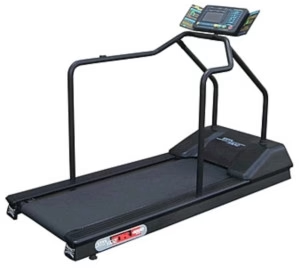
In 1987, Star Trac introduced the Star Trac 2000, the first DC-powered commercial treadmill designed exclusively for health clubs. (Athletic Business, "The Evolution of Fitness Equipment," 2017) It was a landmark moment, not just for the brand, but for the entire category. DC motors offered more controllable, consistent performance than their predecessors, translating to a smoother, more reliable running experience on the demanding conditions of a commercial gym floor.
What that machine represented to the market:
- For operators: A treadmill that could handle real volume without compromising member experience
- For members: A machine that actually felt built for serious training
- For the industry: A clear signal that commercial and consumer equipment were no longer the same thing
The brand's reputation for many years was built as a treadmill company and the name slowly evolved from "Star Trac by Unisen" until the Unisen name was dropped entirely, leaving Star Trac to stand on its own. (SNEWS, "Star Trac Pumps It Up With Acquisition of Flex Fitness," 2004)
The 1990s: Innovation Becomes Identity
By the early 1990s, the American fitness industry had transformed from a niche subculture into a mainstream institution. The treadmill had emerged as the dominant piece of cardiovascular equipment, and Star Trac was firmly established as one of the companies defining what a quality commercial treadmill looked like.
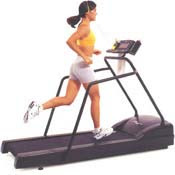
But Star Trac wasn't content to hold ground. The brand began compiling what would become a signature list of user-focused innovations with features so practical they would eventually become standard across the entire industry.
Star Trac innovations that became industry standards:
- Personal cooling fans, built directly into the machine
- Water bottle holders and towel bars integrated into the frame
- Contact heart rate sensors and programmatic heart rate training (Athletic Business, "Top 20 Product Trends from the Past 20 Years," 2005)
- A motivational track display showing real-time user progress
- Space for a magazine or music player as a standard console feature
The personal fan, in particular, became one of Star Trac's most recognizable trademarks. In a high-traffic club environment, where members work at high intensities in close proximity, staying cool without leaving the machine was a genuine quality-of-life improvement, one that operators valued because it kept members on equipment longer and satisfied with the experience.
The 1990s also confirmed Star Trac as a full cardio lineup, not just a treadmill specialist:
- The Elliptical Edge, one of the earliest commercial ellipticals from a major manufacturer (Athletic Business, "Top 20 Product Trends from the Past 20 Years," 2005)
- Trekking, a group exercise program on treadmills, among the first attempts to turn an individual cardio machine into a group programming platform (Athletic Business, "Top 20 Product Trends from the Past 20 Years," 2005)
The through-line across all of it: Star Trac was not following trends. It was engineering solutions to user needs and letting the industry catch up.
The Spinning Partnership: A Revolution, and Star Trac Was Ready
Nothing transformed the gym floor of the late 1990s and early 2000s more fundamentally than indoor cycling. The Spinning® program turned group exercise into something more visceral and challenging than it had ever been. Clubs that offered it filled classes. Clubs that didn't began to feel the absence.
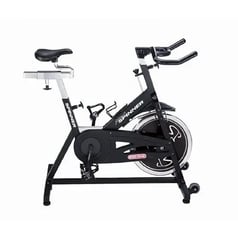 Star Trac Johnny G First Generation Spinner Pro
Star Trac recognized early on that this wasn't a fad, it was the future of group cardio. When Johnny G separated from Schwinn and joined Star Trac in 2003, the partnership produced the Star Trac Johnny G First Generation Spinner Pro, innovating with a rounded apex flywheel and a handlebar offering three rider positions. (Studio-Cycles, "The History of Indoor Cycling")
The results spoke for themselves. Star Trac Spinner® bikes became the standard for indoor cycling equipment globally, with nearly one out of every two bikes sold worldwide being a Spinner bike. For club operators, it meant a single commercial partner capable of outfitting both their treadmill bays and their cycling studios with the same level of quality and commitment.
Design Elevated: The BMW DesignworksUSA Partnership
Commercial fitness equipment had long suffered from a visual identity problem. The machines worked well, but they looked institutional, utilitarian, forgettable. As health clubs evolved into premium lifestyle environments, operators began demanding equipment that matched the aesthetic ambition of their spaces.
Star Trac answered that challenge by doing something no other fitness equipment company had done: it partnered with BMW Group DesignworksUSA, one of the most respected industrial design firms in the world.
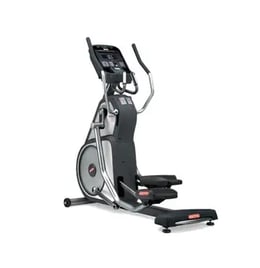
Star Trac E-Total Body Trainer Elliptical
The collaboration wasn't cosmetic. It produced a product family built around:
- A unified visual language across the full cardio lineup
- Interfaces designed for intuitive use by members of every tech comfort level
- Consistent, polished aesthetics that made cardio floors look intentional
Operators were proud to put these machines on their floors, not just because they performed, but because they made the space look serious. Star Trac understood that equipment is an extension of a facility's brand.
Expanding the Portfolio: Strength and a Full-Facility Vision
As Star Trac's cardio presence solidified, the brand expanded into strength equipment, not to abandon its cardio identity, but to offer operators the ability to outfit a complete facility through a single commercial partner.
In 2004, Star Trac acquired Flex Fitness Inc., the California-based strength brand, accelerating its entry into selectorized and plate-loaded equipment. (Health Club Management, "Star Trac Acquires Flex Fitness," November 2004)
Key strength innovations that followed:
- Leverage line: Plate-loaded equipment with converging and diverging pieces for natural free weight motion, in the smallest footprint in its class
- Lock N Load system: A patented weight selection design that eliminated pin-and-lanyard frustrations and reduced maintenance demands in high-traffic environments
- Impact Strength line: A full selectorized system built on 30 years of proven biomechanics
By the mid-2000s, Star Trac had become more than a treadmill company, or even a cardio company. It was a full commercial fitness solutions provider with more than a dozen unique patents and many of its innovations becoming industry standards.
A Speed Bump, and a Builder Who Saw the Future
Like many influential fitness brands, Star Trac's story includes turbulence alongside its triumphs. The financial crisis of the late 2000s struck the commercial fitness industry hard. Clubs deferred equipment purchases. Capital dried up. Brands built over decades found themselves under pressure.
By 2010, Star Trac was a company with a formidable reputation and a balance sheet that needed attention. What it needed was not a caretaker, but a builder.
That person was Michael Bruno.
On July 7, 2010, Star Trac announced that Bruno had signed an agreement to purchase the controlling interest in Star Trac's parent company. (GlobeNewswire, "Star Trac Reorganization Fueled by Michael Bruno Acquisition," July 7, 2010) A highly respected fitness industry veteran with more than 20 years of global manufacturing experience, Bruno had already acquired StairMaster and the commercial rights to Schwinn Indoor Cycling from Nautilus earlier that year. His reorganization plan focused on company continuity and aggressive streamlining and a clear commitment to the product innovation and customer service that had defined Star Trac's legacy since 1979.
The acquisition was more than a rescue. It was the beginning of something bigger.
From Portfolio to Ecosystem: The Birth of Core Health & Fitness
When Michael Bruno brought Star Trac into his growing family of brands, the pieces of something genuinely new took shape.
Star Trac and StairMaster were initially run as separate entities. "We had great brands, but didn't have any systems to unite them at the very beginning," noted Dustin Grosz, who joined in 2009 and consolidated the businesses in 2011. (Manufacturing Today, "Core Health and Fitness," 2013) What emerged from that consolidation was not just an equipment company, it was a full commercial fitness ecosystem.
Core Health & Fitness today unites:
- Star Trac: treadmills, ellipticals, bikes, and cross-trainers engineered to the highest commercial standard
- StairMaster: vertical conditioning that no other machine can replicate
- Schwinn: group cycling and cardio programming
- Nautilus: commercial selectorized and plate loaded strength
- Throwdown: functional fitness and high-intensity training
- Gym Rax: modular strength and storage systems designed for hospitality and multi-housing spaces where every square foot has to earn its place
- Wexer: a global digital training platform that extends the fitness floor into on-demand, virtual, and instructor-led programming for members wherever they train
Together, these brands serve fitness facilities in more than 100 countries, including major chains such as Equinox, L.A. Fitness, Anytime Fitness, and 24 Hour Fitness, as well as YMCAs, hotels, universities, corporate wellness centers, and multi-housing properties. (Manufacturing Today, "Core Health and Fitness," 2013)
For operators across every vertical, Core Health & Fitness delivers a unified solution: one partner, one standard, every modality covered.
What Star Trac Represents Today
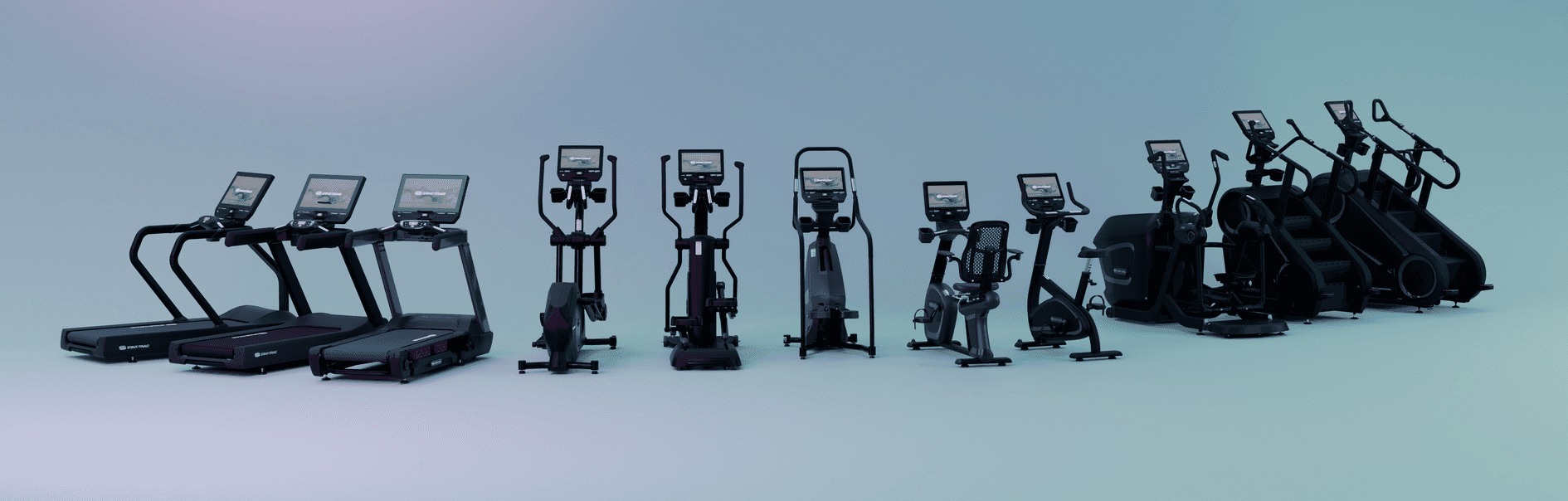
More than four decades after its founding, Star Trac remains the defining standard for commercial cardio in markets around the world. The current lineup reflects that commitment across every category:
- FreeRunner Treadmill: Patented HexDeck system delivering a track-like, cushioned response engineered to reduce joint impact for high-intensity use
- 8 Series: The full commercial experience, built for sustained, high-volume club environments
- Upright and Recumbent Bikes: The same design discipline applied to seated cardio
- Ellipticals and Cross-Trainers: Low-impact versatility for members of every fitness level
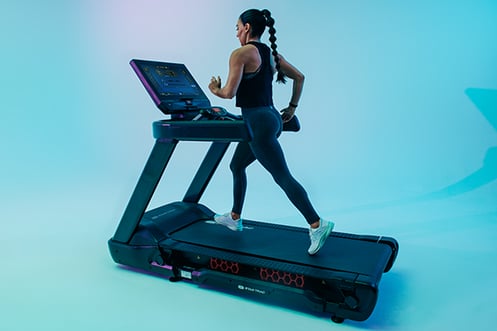 Srar Trac 10TRx FreeRunner, With Launch Edition Red Hex.
Under Core Health & Fitness, Star Trac now serves facilities in over 100 countries, backed by global manufacturing and a service infrastructure built to keep machines running where downtime is not an option. (Core Health & Fitness, "About Us") The consoles have evolved. The entertainment integration, data tracking, and connected-fitness capabilities would be unrecognizable to the engineers who built the Star Trac 2000.
But the foundation has not changed.
Commercial first. User focused. Built to last.
Looking Ahead
The fitness industry is in the middle of its most consequential period of evolution in decades. Members expect more from the equipment they train on. Operators expect more from the partners they build with. Facilities must serve athletes, beginners, hotel guests, apartment residents, and corporate employees, often in the same space.
Star Trac was built for exactly this moment. Not because it chased the trend, but because it never stopped asking what the user actually needed and building toward that answer.
The facilities that win the next era of fitness will think in ecosystems, not individual machines. They'll want a floor that performs as a unified environment, where the treadmill, the bike, the elliptical, and the stair climber all reflect the same engineering standard, the same user-first design, and the same reliability under heavy commercial use.
Star Trac has set the pace since 1979. It has no intention of slowing down.
Sources:
- Athletic Business, "The Evolution of Fitness Equipment," 2017. athleticbusiness.com
- Athletic Business, "Top 20 Product Trends from the Past 20 Years," 2005. athleticbusiness.com
- SNEWS, "Star Trac Pumps It Up With Acquisition of Flex Fitness," 2004. snewsnet.com
- Health Club Management, "Star Trac Acquires Flex Fitness," November 2004. healthclubmanagement.co.uk
- Health Club Management, "Michael Bruno Takes Over Star Trac," July 2010. healthclubmanagement.co.uk
- GlobeNewswire, "Star Trac Reorganization Fueled by Michael Bruno Acquisition," July 7, 2010. globenewswire.com
- SGB Media, "Star Trac Appoints President and COO," March 2011. sgbonline.com
- Manufacturing Today, "Core Health and Fitness," 2013. manufacturing-today.com
- Club Solutions Magazine, "Fitness on Star Trac's Terms," February 2012. clubsolutionsmagazine.com
- Core Health & Fitness, "About Us." corehandf.com
- Studio-Cycles, "The History of Indoor Cycling." studio-cycles.com