
.png)
.png)
.png)
.png)










From Base Camp to Finish Line: How Core Health & Fitness Brought the Gym to the World's Highest Marathon
At 18,000 feet, the difference between finishing and faltering comes down to preparation. Here's how SEARA International and Core Health & Fitness changed the athlete experience at the Tenzing Hillary Everest Marathon — forever.
A Race Born From the World's Greatest Ascent
Every year on May 29, a date etched into mountaineering history, athletes from across the globe converge at Everest Base Camp in Nepal. They're not there simply to run. They're there to test themselves against one of the most unforgiving environments on earth and to honor the legacy of Tenzing Norgay Sherpa and Sir Edmund Hillary, who on this day in 1953 became the first humans to stand atop the world's highest peak.
The Tenzing Hillary Everest Marathon is the highest annual marathon on the planet. It follows the very terrain that defined one of history's greatest human achievements; winding down from Base Camp through Gorakshep, Dingboche, and into the village of Namche Bazar, with 360-degree panoramas of the Himalayan range at every turn.
Participants choose their distance and their challenge:
- Full Marathon (42.195 km): Everest Base Camp to Namche Bazar, including a climb to Kala Patthar
- Half Marathon (21 km): Dingboche to Namche Bazar
- Ultra-Marathon / UTEM (70 km): A grueling traverse of Base Camp to Namche Bazar across raw Himalayan terrain
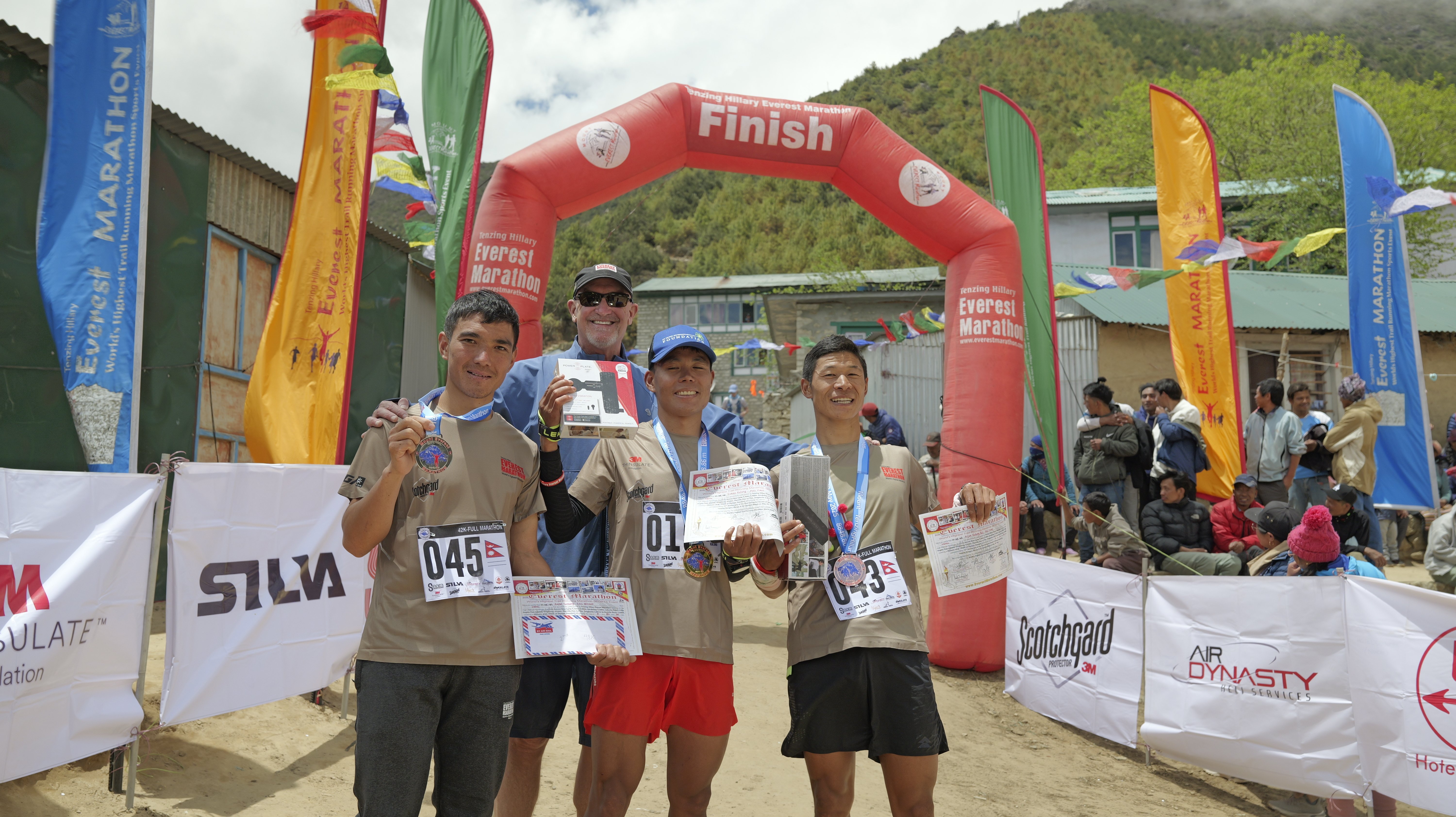
"This is not just a race — it's a once-in-a-lifetime adventure at the edge of the world."
— Tenzing Hillary Everest Marathon Organizers
But before a single step of the race is taken, every participant faces a challenge that begins weeks earlier and roughly 13,000 feet below the start lin
The Journey Up: Ten Days of Acclimatization Before the Race Begins
Getting to the start line of the Everest Marathon is itself an expedition. Athletes spend ten days trekking from approximately 2,000 meters (6,500 ft) in Lukla all the way to Base Camp at 5,364 meters (17,598 ft). The trek is not merely logistical, it is physiological. The body must slowly learn to function with dramatically less oxygen.
Geoff Heydt, Director of Hospitality and International Business Development at SEARA International, has made this trek multiple times alongside participants. He describes the journey in stages:
At lower elevations, the challenge is heat and humidity. Dense jungle trails, steep stone staircases, and relentless humidity push heart rates up before the thin air even becomes a factor. But as athletes ascend through Namche Bazar, Tengboche, and Dingboche, conditions shift dramatically.
"As you ascend, temperature becomes a real issue," Heydt notes. "The challenge is to avoid sweating as the temperature drops. As the air thins, you slow down. In many cases, appetite disappears, sleep becomes difficult — which makes the six-to-eight-hour walk the next day that much harder."
The physiological toll of altitude is well-documented, but often underestimated by first-timers. At extreme elevation, the body begins to shed muscle mass to compensate for oxygen deprivation. The digestive system is compromised. Even protein-rich foods become harder to source, and harder to digest, the higher you climb.
By the time athletes arrive at Base Camp, they've already tested their bodies significantly. And then the real challenge begins: preparing to run a marathon in sub-zero temperatures, on a landscape of rock and glacier ice, with roughly 40% less available oxygen than at sea level.
The Missing Link: Structured Preparation at Altitude
For all its history and prestige, the Everest Marathon had a critical gap in the athlete experience. While participants spent days trekking to Base Camp, a process that aids acclimatization through low-intensity movement, there was no structured way to elevate heart rate, activate muscle groups, or simulate race-day intensity before the gun went off.
Base Camp itself offers little in the way of training terrain. It is a landscape of shifting glacial rock, crevasses, and ice pools. Walking freely presents genuine risk. Running is dangerous. And without a controlled environment to raise heart rate, athletes essentially arrived at the start line undertrained for the specific physiological demands of race day.
The gap was threefold:
- No mechanism to elevate heart rate in a controlled, safe environment at altitude
- No space for structured warm-up, muscle activation, or pre-race conditioning
- No dedicated recovery environment after crossing the finish line
For an event defined by extremes, the infrastructure hadn't kept pace with the ambitions of its participants. That was about to change.
The Idea That Started Almost as a Joke
SEARA International's entry into the Tenzing Hillary Everest Marathon as presenting sponsor was a deliberate strategic move. The company was in the process of establishing a local distribution operation in Kathmandu for Core Health & Fitness equipment and other brands in the SEARA portfolio. The Everest Marathon, Nepal's most prominent international sporting event, offered unmatched local visibility and global storytelling potential.
"We chose this sponsorship because of its extreme nature," says Heydt. "It gave us the opportunity to align ourselves with one of the world's best-known brands — and to enter the extreme trail running sector with a cornerstone event."
But the idea for a Base Camp gym? That came later. "I suggested it almost as a joke or a novelty idea at first," Heydt admits. "When you consider the logistics, it seems impossible. But the event organizers assured us it could be done. And it turned out to be one of the most unique aspects of the entire event."
"It turned out to be one of the most unique aspects of the entire event."
— Geoff Heydt, SEARA International
With a concept in hand, SEARA turned to Core Health & Fitness, a natural fit. As the Core distributor across multiple markets, SEARA had deep relationships with the brand's leadership. "With my experience with Core and some of their key people, I knew something like this would be extremely interesting to them," Heydt says. "The people I worked with saw the value in this out-of-the-box idea immediately — so we ran with it."
Building the Highest Gym in the World: Equipment Selection at 18,000 Feet
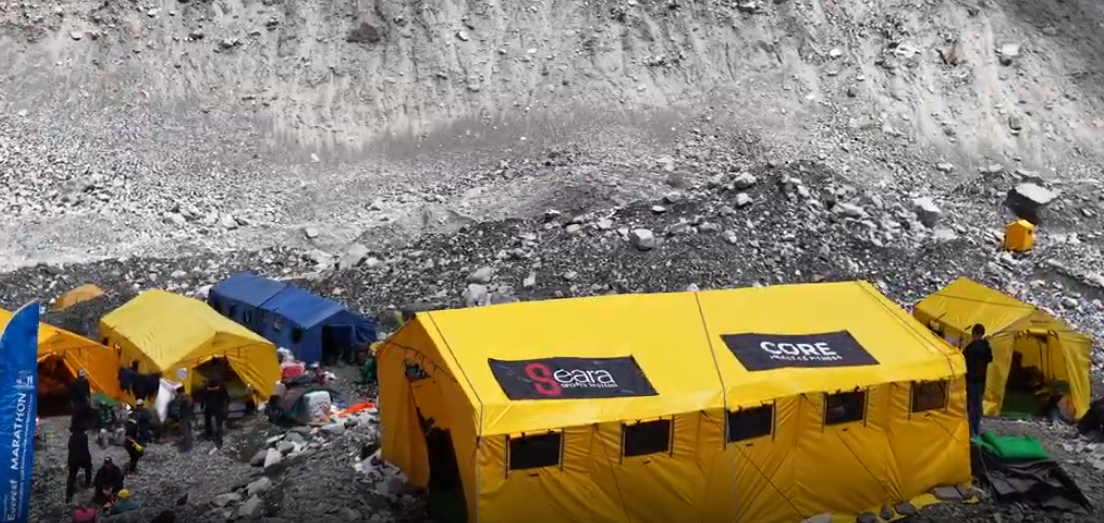
Transporting fitness equipment to Everest Base Camp is not a standard logistics problem. Every piece must travel from Kathmandu via helicopter to the mountain's lower reaches, then continue by yak and human porter across some of the world's most challenging terrain. Once there, equipment must be stored at 5,000 meters in the remote village of Gorakshep between annual events; exposed to extreme cold, moisture, and altitude year-round.
SEARA and Core faced a specific set of constraints that would define every equipment decision:
- Weight and dimensional limits for helicopter, yak, and porter transport
- No available power source at Base Camp, no generators, no electrical infrastructure
- Electronics rendered non-functional at extreme altitude
- Long-term storage in sub-zero, high-humidity conditions between events
- Usability by athletes who may be oxygen-deprived, fatigued, or hypothermic
The solution was precise: four Schwinn IC Classic Bikes and two Nautilus Stretch Benches.
Both selections were made for the same core reasons, no electronics, no power requirements, and a form factor manageable for human and animal transport. The bikes allow athletes to sustain elevated heart rates for extended periods without impact, critical in a low-oxygen environment where overexertion carries real risk. The stretch benches support mobility, muscle activation, and recovery, addressing all three phases of the athlete's Base Camp experience.
Performance in the Field
The real test came in use. "Although they show signs of use after being dragged across rock and ice each year, there have been no problems affecting functionality whatsoever," Heydt reports. "All pieces have held up far better than expected."
These six pieces of equipment have now completed two full expeditions to Everest Base Camp and are scheduled for their third trek in May. For a sales organization like Core Health & Fitness, that track record is a tangible proof point — one that travels across every market SEARA serves.
2 Consecutive Years at Base Camp
6 Equipment Pieces Deployed
18,000 ft / 5,364 m Elevation
What Athletes Found at the Top of the World
When participants arrived at Base Camp after ten days of trekking, the last thing they expected to find was a gym. The reaction was consistent: disbelief, then relief.
"It is one of the biggest surprises when everyone arrives at Base Camp," Heydt says. "They are absolutely amazed. They have this facility available to them at all hours of the day."
For three full days before the race, the tent housing the equipment was packed from morning until late afternoon. Athletes cycled in on 30-minute rotations, not for a full workout, but for a specific purpose: elevating heart rate in a safe, controlled setting. Combined with the Nautilus stretch benches and supplemental vibration massage tools, the space offered something Base Camp had never had, a way to get the body ready.
"The subzero temperatures and tight muscles from the trek up are easily loosened with a little bike ride, some stretching, and vibrational massage," Heydt explains. "It became the most popular place at Base Camp."
"The ones we saw most in the gym over three days wound up finishing in the top 10."
— Geoff Heydt, SEARA International
The space drew more than just race participants. Nepalese government officials overseeing Base Camp operations stopped by. The Base Camp emergency services team came to see it. Word spread quickly and the impact extended well beyond a single event. Bikes have since become a common sight at Base Camp during Himalayan expedition season.
The performance correlation was hard to ignore. "The ones we saw most in the gym over a three-day period wound up finishing in the top 10," Heydt notes. "Many of them commented on how the gym really helped their performance."
The StairMaster Factor: How Endurance Athletes Train Before the Trek
One of the more revealing findings from Heydt's interviews with participants was about pre-event preparation. The question was simple: what equipment did you train on before arriving in Nepal?
The answer, overwhelmingly, was the StairMaster.
"I found it interesting that StairMaster is the brand you hear the most when it comes to preparation," Heydt says. "[…] the StairMaster is immediately associated with that form of exercise. That's what they remember."
The insight reflects something important about athlete psychology and brand association in endurance sport. StepMill-style training, sustained stair climbing under load, is arguably the most direct analog for high-altitude trekking. It builds the quad and glute strength necessary for long ascents, trains cardiovascular output at sustained high effort, and conditions the respiratory system for the sustained demands of elevation gain.
Roughly seven to eight out of ten participants interviewed cited stair-climbing equipment as central to their pre-event preparation. For a brand like Core Health & Fitness, whose StairMaster division leads the category, it reinforces both the relevance of the partnership and the performance credentials of the equipment now operating at Base Camp.
The Human Story: Sally Orange and the Power of the Marathon
The Tenzing Hillary Everest Marathon draws extraordinary athletes, but some participants redefine what extraordinary means.
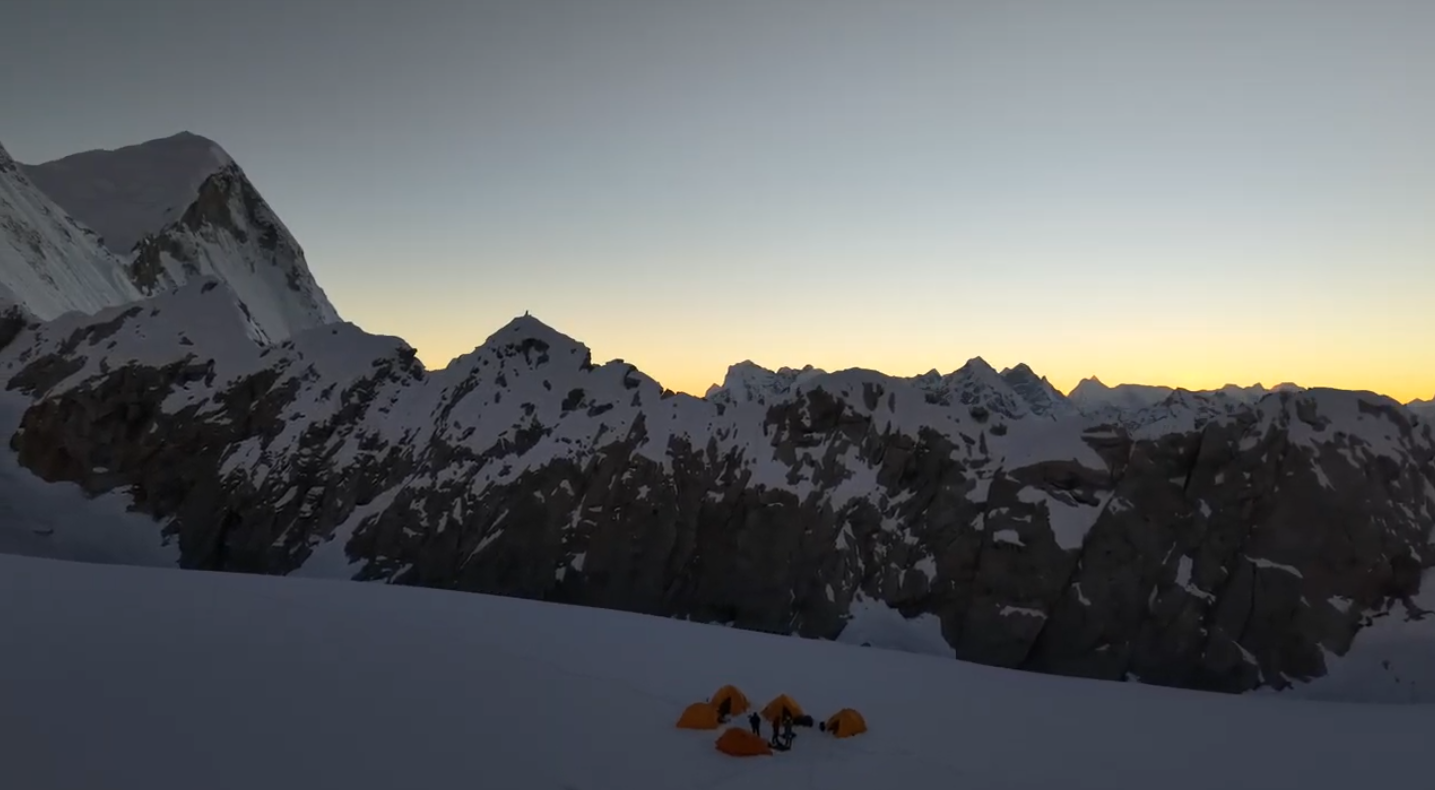
Among the standout figures over the past two years is Sally Orange, a UK-based former military officer who has competed in the marathon in support of breast cancer awareness. In 2024, she completed the full marathon dressed as a giant orange. In 2025, she ran the course in an inflatable breast costume.
SEARA conducted interviews with Sally and a friend who had beaten breast cancer, and the stories became the foundation of a documentary about the event. Their journey, combining extreme physical challenge with deeply personal advocacy, captures something essential about why the Everest Marathon resonates far beyond the running community.
"Her strength and perseverance to complete a race like this is just extremely impressive," Heydt says. Sally recently completed a half marathon in the UK after finishing chemotherapy treatment. SEARA is in discussions to bring her back to the 2026 event, where a broader promotion built around her story and her work with breast cancer associations is being developed.
It is a reminder that at the highest marathon in the world, performance is never purely physical. It is also an act of meaning.
Trail Running's Global Rise — and Why Everest Is Just the Beginning
The Tenzing Hillary Everest Marathon sits within a larger, rapidly expanding ecosystem: the global trail running and endurance sport market, which is growing fastest across Southeast Asia.
SEARA's strategy reflects this trend directly. Beyond Everest, the company has built relationships with major trail running clubs in Vietnam and Thailand, and is expanding its event sponsorship footprint to include extreme endurance events across each of its markets. The goal is not to be a logo on a banner, it is to be embedded in the culture and infrastructure of the sport itself.
For Core Health & Fitness, the partnership opens a credibility conversation that is difficult to manufacture through conventional marketing. Equipment that performs at Base Camp, through two years of transport via helicopter and yak, stored in sub-zero conditions, used by athletes pushing their physical limits in hypoxic environments, that is a proof point that travels.
Athletes are no longer just looking to complete events. They are looking for better preparation, stronger support systems, and more complete experiences. Events, and brands, that adapt to those expectations stand apart.
Where Claims End and Performance Begins
At Everest Base Camp, there is no room for marketing language. The altitude is real. The terrain is unforgiving. The effort is undeniable. In that environment, equipment either performs or it doesn't and people either finish or they don't.
What SEARA and Core Health & Fitness demonstrated over two years at the world's highest marathon is something that can't be simulated in a trade show booth or a product brochure: that when conditions are at their most extreme, the right tools make the difference between preparation and struggle.
Strength is built over time. Endurance is earned step by step. At the edge of the world, both are put to the test.
"It's built to perform anywhere."
For the athletes who spent three days in that Base Camp tent, cycling, stretching, raising their heart rates at 18,000 feet, the finish line wasn't just a destination; It was the result of everything they had built. And the equipment that supported them on the way there was part of that story.
About SEARA International
SEARA International is a regional distributor of leading fitness and wellness equipment brands, including Core Health & Fitness, across Southeast Asia and beyond. As presenting sponsor of the Tenzing Hillary Everest Marathon, SEARA brings world-class training infrastructure to the world's highest race.
About Core Health & Fitness
Core Health & Fitness is a global fitness equipment manufacturer whose brands including StairMaster, Nautilus, Schwinn, Star Trac, Throwdown, Gym Rax and Wexer are trusted by athletes, trainers, and facilities worldwide. The Everest Base Camp deployment marks the highest-altitude real-world proof of the brand's equipment durability and performance standards.