
.png)
.png)
.png)
.png)










An effective gym equipment list always starts with an important question: who is the facility actually built for?
Beyond a treadmill, a few dumbbells, and basic cardio equipment, the right mix of fitness equipment depends entirely on member expectations, training habits, available floor space, and how intensely equipment will be used over time. A hotel fitness center and a 20,000-square-foot commercial gym may require the same broad equipment categories: cardio, strength training equipment, free weights, and functional training. But the way those categories are prioritized should look completely different.
The issue for many gym owners isn’t equipment quantity —it’s equipment strategy.
High-performing fitness facilities treat gym equipment lists as an operational decision, not a purchasing checklist. They are built around intentional decision-making shaped by usage patterns, training models, member behavior and maintenance realities that determine long-term facility performance.
Key Takeaways
-
An effective gym equipment list is built around member behavior, training demand, and long-term operational performance.
-
Commercial gyms, hospitality fitness centers, multifamily facilities each require different equipment strategies based on how the space is used.
-
Cardio equipment shapes both first impressions and long-term reliability of the fitness floor.
-
Connected equipment ecosystems help create more cohesive training experiences and more efficient facility operations over time.
What’s the biggest mistake operators make when building a gym equipment list?
Not understanding the targeted demographic. Most brands allow variances in the fitness center so operators can meet budgets and guest expectations. But often operators only worry about the budget and create a fitness center that is not relevant for the guests who are staying at the hotel. This leads to unused space and no ROI in terms of guest satisfaction.
–Trevor Kori, Core Health & Fitness Director of Hospitality
Owners design a gym that looks like a showroom instead of one built for operational efficiency, traffic flow, and member behavior — especially during peak-hour congestion. The best facilities prioritize and build around high-demand zones because these areas offer the most variety and versatility. We want to find that sweet spot of what looks really cool and motivating, yet has the foundation and flow to handle the demand.
–Tony Gray, Core Health and Fitness North America Senior Territory Manager
Starting A Gym Equipment List That Matches Your Members
An effective gym equipment list is determined by far more than equipment alone. Before selecting cardio machines, free weights, or strength training equipment, operators need to understand who the facility serves, how heavily the equipment will be used, and how the training environment needs to function over time.1
.jpg?width=8148&height=5432&name=Raleigh-YMCA-8581%20(1).jpg)
Define Who the Equipment is For
Most gym equipment lists fail before the first machine is ordered because operators start with products instead of the people the facility is built for.
Owners trying to be everything to everyone end up with an equipment mix that doesn't appeal to any audience. The best facilities build around what makes that gym special. We want to highlight that culture and what you want members to feel about belonging in your gym.
–Tony Gray, Core Health and Fitness North America Senior Territory Manager
Performance-focused athletes, casual health club members, hotel guests, university students, and multifamily residents all move through fitness spaces differently. Their training habits, intensity levels, and expectations directly influence equipment selection, floor space allocation, and operational demands across the facility.
A serious strength-training member notices whether there are enough squat racks, lifting platforms, benches, and plate-loaded stations available during peak hours. A multifamily resident often values accessibility and versatility without feeling overwhelmed by highly specialized strength-training equipment.
An effective equipment list reflects those realities instead of forcing every facility into the same generic template.
Usage Patterns Influence Equipment Strategy
The more heavily equipment is used, the more durability and useful life matters.
A high-volume commercial gym may see treadmills operating continuously for 12–16 hours per day. In that environment, commercial-grade construction, serviceability, and long-term reliability are operational requirements –not premium upgrades.
A lightly used hospitality fitness center operates differently. Simplicity, intuitive usability, low maintenance requirements, and efficient use of limited square footage often matter more than maximizing equipment quantity.
Floor Space Follows Training Demand
Intentional space allocation matters just as much as equipment selection.
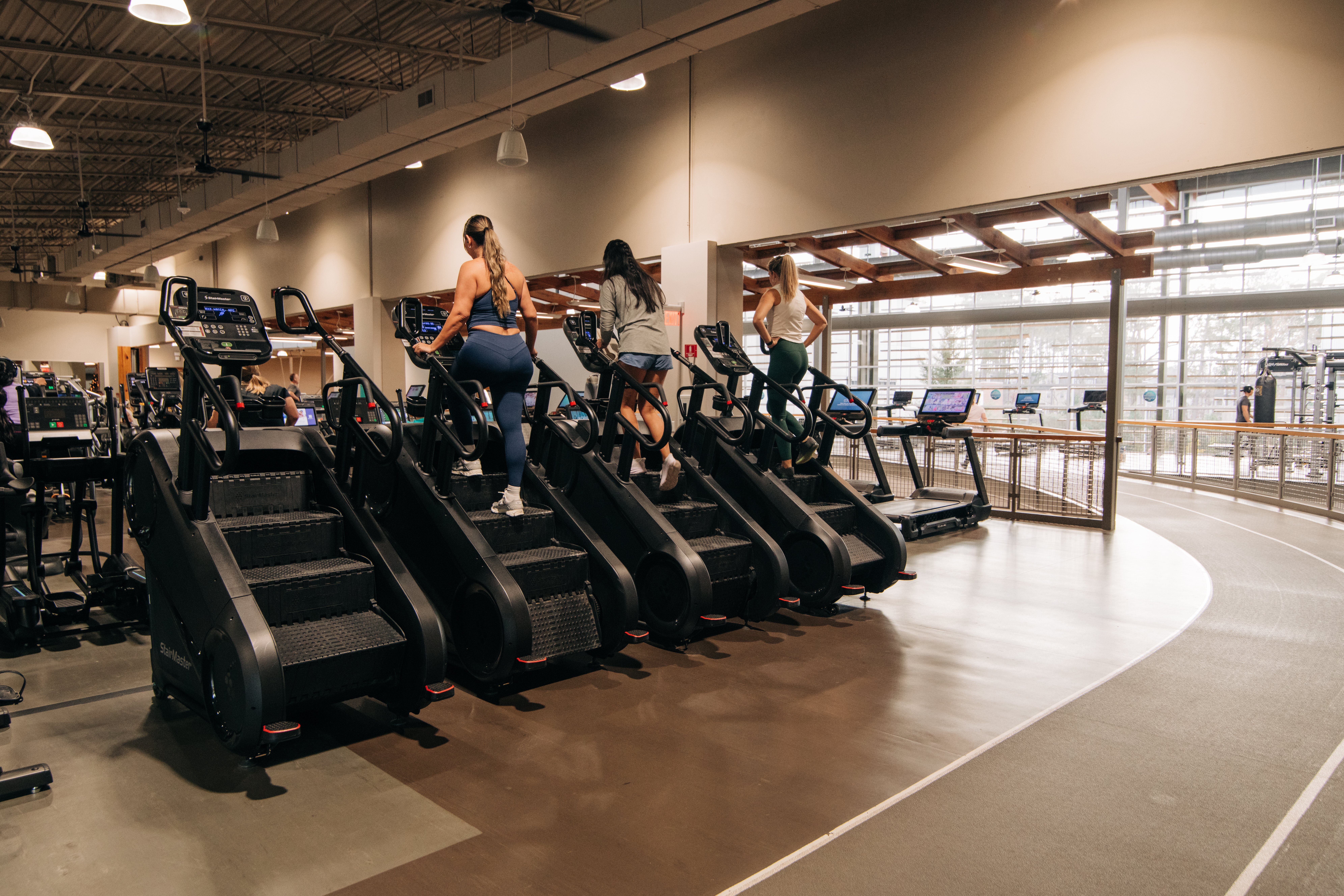
Cardio-heavy fitness facilities require larger, sightline-oriented cardio zones with enough circulation space between treadmills, ellipticals, stationary bikes, stair climbers, and other cardio machines. Strength-focused facilities require more square footage per training station because free weights, weightlifting platforms, benches, and racks create larger movement patterns and greater safety clearances.
Functional training environments require something many operators still underestimate: open space. Not empty space. Usable space.
Modern gym-goers increasingly expect more room for conditioning work, mobility training, resistance bands, kettlebells, battle ropes, stretching and full-body movement outside the limitations of fixed machine paths.
Gym Equipment Categories Every Facility Should Plan For
Most commercial gyms are built around fundamental equipment categories. The difference is not whether a facility includes cardio, strength, or functional training –it’s how heavily each category is prioritized based on the member profile, training model, and available floor space.
Cardio Equipment
Cardio equipment remains the foundation of most commercial fitness floors because it serves the widest range of users across nearly every facility type.2
Treadmills typically anchor the category due to consistent usage volume, while ellipticals, stationary bikes, and rowing machines expand accessibility, low-impact conditioning, and functional training capacity. In many facilities, cardio equipment shapes first impressions because it occupies some of the most visible space on the gym floor.
Selectorized Strength Equipment
Selectorized strength equipment creates accessibility for a broad member population while maintaining space efficiency across the facility.
Because guided movement patterns reduce the learning curve for beginners, selectorized machines remain essential in hospitality fitness centers, multifamily gyms, wellness spaces, and mixed-membership commercial clubs. They also help operators create balanced strength-training environments without requiring large free-weight footprints.
Free Weights and Strength Essentials
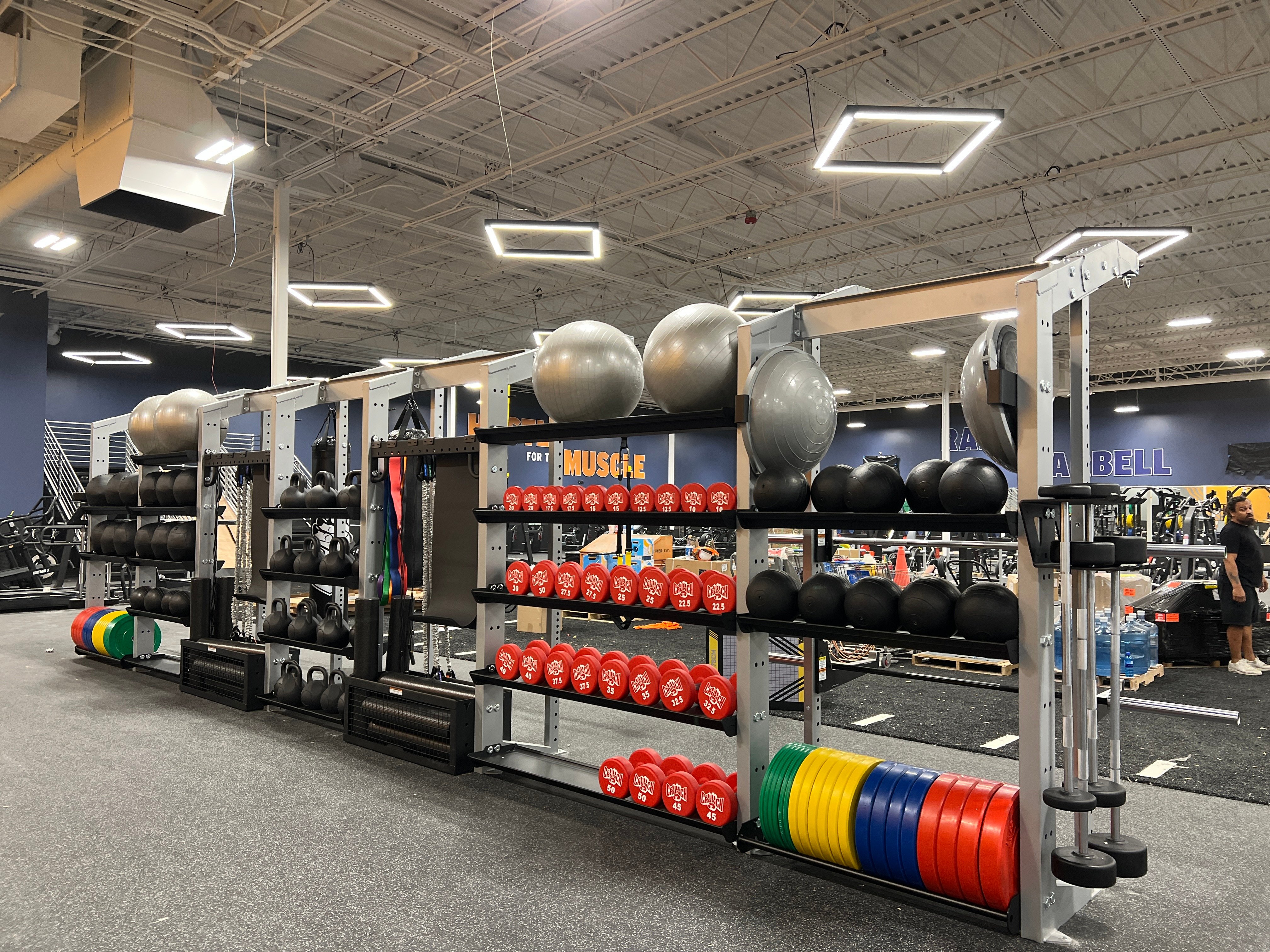
Free weights remain one of the clearest indicators of training capability within a fitness facility.
Dumbbells, barbells, benches, racks, and weight plates support progressive strength training, compound lifts, and higher-intensity fitness programs that fixed machines cannot fully replicate. Free-weight environments also require more intentional planning around spacing, circulation, storage, and safety clearances.
Functional Training Spaces
Functional training has become one of the fastest-growing categories in commercial fitness because it supports flexibility across multiple workout styles.
Cable systems, kettlebells, resistance bands, open floor space, and modular training stations allow facilities to accommodate conditioning work, mobility training, small-group sessions, and performance-focused programming within the same footprint. For many operators, functional training improves long-term adaptability as member preferences evolve.
Accessories and Recovery Areas
Recovery and accessory spaces are often the most overlooked areas on the gym floor –and one of the most visible to members.
Foam rollers, stretching mats, mobility tools, medicine balls, and recovery zones help complete the training environment while supporting warmups, cooldowns, flexibility work, and lower-intensity movement.2 Recovery areas can elevate the overall training experience while making the fitness center feel more complete and intentional.
Gym Equipment List by Facility Type
High-performing fitness facilities are built as integrated training environments where equipment strategy, member expectations, and operational flow work together from day one.
Commercial fitness clubs, hospitality fitness centers, and multifamily gyms may share similar equipment categories, but the scale, layout priorities, and member expectations behind each environment are fundamentally different.
Commercial Fitness Clubs
Commercial fitness clubs require the broadest equipment mix because they support the widest range of exercises, fitness levels, and peak-hour traffic demands.
Most larger facilities prioritize:
-
Full cardio rows
-
Extensive selectorized strength equipment
-
Dedicated free-weight zones
-
Functional training areas
-
Group fitness studios
-
Recovery and stretching space
Larger fitness facilities also require enough circulation space, rack capacity, and training variety to support peak-hour without compromising usability and member flow.
Core Health & Fitness North America Senior Territory Manager, Tony Gray, cautions that the biggest risk for commercial operators isn't under-investing —it's losing focus. Facilities that try to appeal to every possible member often end up with an equipment mix that resonates with no one in particular. The strongest commercial gyms are built around a clear identity, whether that's an emphasis on strength training, bodybuilding, active aging, or recovery, and that identity shapes every equipment decision that follows. Members don't just join a gym for the machines, they join for how the environment makes them feel about training there.
Hospitality Fitness Centers
Hospitality fitness centers prioritize simplicity, accessibility, and immediate usability. Most hotel fitness centers perform best with a focused equipment mix that typically includes:
-
3–6 cardio machines
-
Treadmill-first cardio selection
-
1–2 selectorized strength pieces
-
Adjustable benches
-
Light functional accessories
Guests often train without staff assistance, which makes intuitive layouts and approachable equipment just as important as equipment quality itself. In many hospitality environments, a smaller but highly intentional fitness center performs better than a crowded room filled with underused equipment.
Core Health & Fitness Fitness Director of Hospitality, Trevor Kori, adds that hospitality operators need to think further ahead than most. Because hotel fitness centers typically go 6 to 8 years between refreshes, equipment decisions made today need to anticipate how guest expectations will shift over that window. The next generation of business travelers is already showing stronger preferences for functional training spaces, emerging from an education environment where that training model is common. Technology integration and holistic wellness are also becoming baseline expectations rather than premium additions —a meaningful departure from what older traveler demographics have historically prioritized.
Multifamily Fitness Centers
Multifamily fitness centers require versatility above all else.
The equipment needs to support both casual residents and more experienced users while remaining durable enough for largely unsupervised operation. Most successful multifamily fitness centers balance:
-
4–8 cardio machines
-
Selectorized strength equipment
-
Dumbbells and benches
-
Functional training space
-
Compact accessory storage
Because these environments often operate within smaller footprints, flexibility and efficient space utilization become critical. Equipment that supports multiple workout styles without overwhelming the floor typically delivers the strongest long-term value.
Core Health & Fitness Director of Strategic Accounts, Gordon Stirling, shares that balanced equipment use in multifamily doesn't happen by accident. It is the result of intentional design from the start. Many residents arrive with commercial club experience and carry those expectations directly into their living environment.
When a multifamily fitness center reflects that same balance of cardio, strength, and functional training, it creates an immediate sense of familiarity and value. When it doesn't, the space feels like an afterthought regardless of budget spent.
Building Smarter Cardio Strategy with Star Trac
For many operators, cardio equipment becomes more than a training category, it is the operational anchor of the entire fitness floor.
Cardio machines often represent the most heavily used equipment in a facility while simultaneously shaping first impressions, traffic flow, member experience, and maintenance demands. That makes equipment specification less about adding machines and more about aligning equipment performance with how the facility actually operates.
The Star Trac equipment series are designed to align with facility type, member profile, and projected usage intensity across a wide range of commercial fitness environments.
Performance-oriented commercial fitness gyms often lean toward the 10 Series and 8 Series because they are engineered for high-throughput environments where durability, advanced training capability, and premium member experience matter every day. These environments demand equipment capable of supporting continuous usage across broad member populations without compromising quality or operational reliability.
The 8 Series is also commonly utilized in higher-end hospitality fitness centers and wellness-focused facilities because its performance capacity and elevated treadmill experience align naturally with luxury hospitality brand standards. Because the series is widely recognized across full commercial fitness environments, it also delivers a level of familiarity many guests associate with premium health clubs.
Hospitality fitness centers and upscale residential properties that prioritize intuitive operation, sleek aesthetics, and dependable full-commercial performance generally utilize the 6 Series. Its refined profile, approachable usability, and efficient footprint make it well suited for hospitality and wellness environments that serve a broad range of users throughout consistent daily operation.
Multifamily fitness centers benefit from the 4 Series, where space efficiency, intuitive operation, and reliable day-to-day performance become essential within largely unsupervised environments. These facilities typically require equipment flexible enough to support both casual residents and more experienced users within compact footprints.
Across every facility type, consistency across the cardio floor creates operational advantages that extend well beyond appearance. A unified equipment ecosystem helps create:
-
Consistent console experiences across machines
-
Simplified service and maintenance relationships
-
Cohesive visual presentation throughout the facility
-
Easier member onboarding and usability
-
Greater operational efficiency
The strongest equipment strategies are built around systems that allow the entire fitness environment to operate more cohesively over time.
What to Prioritize When Budget Is Constrained
Every fitness facility operates within budget constraints. The challenge is determining where cost reductions create the least long-term operational impact.
Prioritize Cardio First
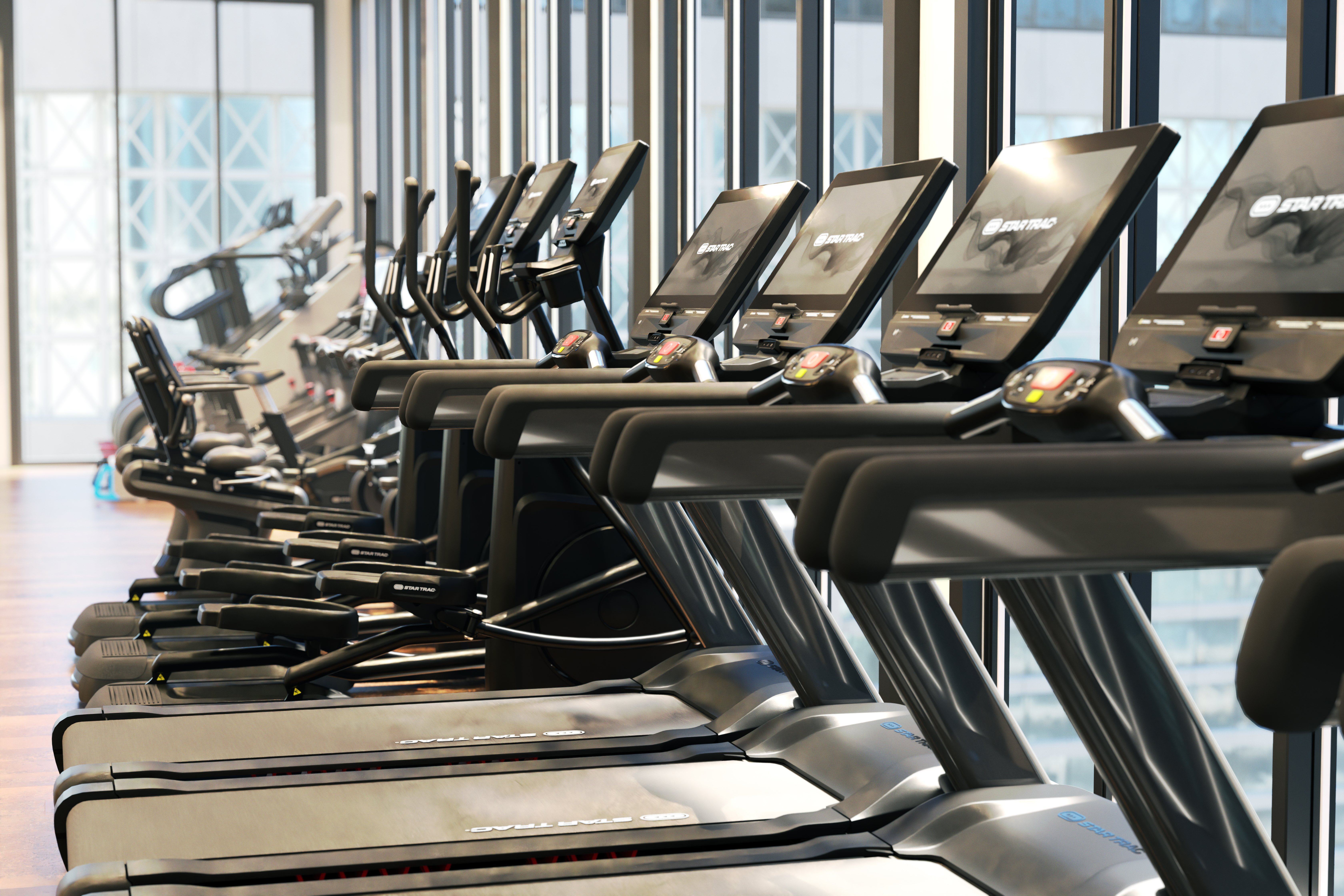
Cardio equipment often defines the first impression of a fitness facility. Because it typically occupies the most visible areas of the gym, members immediately notice outdated, overcrowded, or unreliable equipment.3
For many operators, the cardio floor becomes a visible indicator of the facility’s overall standards, shaping member perception from the moment they enter the space.
When the budget is limited, most operators should invest in cardio first. Most people tend to migrate toward cardio because it's familiar —they know how to ride a bike or walk on a treadmill. From there, a bench and a dual adjustable pulley cover a wide range of exercises in a safe and controlled way. If budget permits, a functional training system with accessories rounds it out. From this point, you can build.
– Gordon Stirling, Core Health & Fitness Director of Strategic Accounts
Invest in Commercial-Grade Equipment Where Usage Is Highest
Treadmills typically absorb more operating hours than any other machine on the floor.
High-use anchor equipment should prioritize:
-
Reliability
-
Serviceability
-
Durability
-
Extended operational lifespan
Short-term savings on heavily utilized equipment often create higher costs through maintenance issues, downtime, and accelerated replacement cycles.
Accessorize After the Foundations are Established
Functional accessories and recovery tools add value to the overall training experience, but they should not come at the expense of foundational cardio or strength equipment quality.
Foam rollers, resistance bands, mobility tools, and recovery accessories help complete the member experience, but facility performance depends on whether the core equipment categories can consistently perform under continuous daily use.
I always tell operators to focus first on meeting the minimum brand specs, then expanding from there to see what will make the fitness center relevant to their intended guests. Right now, open space is the best option. Accessory items are low cost, relevant to today's travelers across all generations, and easy to maintain. It offers a large amount of versatility with a small amount of space.
–Trevor Kori, Core Health & Fitness Director of Hospitality
Where Equipment Strategy Meets Long-Term Performance
The right gym equipment list is never just about filling square footage or maximizing machine count. It’s about creating a training environment that performs consistently under real-world usage while supporting member experience, operational flow and long-term facility growth.
Core Health & Fitness partners with operators, developers, and fitness facilities to build efficient equipment strategies and create connected training environments where durability, usability, layout, and member experience work together to support operational success from day one.
Citations
1Best Commercial Fitness Equipment for Gyms in 2025, n.d., B2B Headlines, https://www.b2bheadlines.com/blog/best-commercial-fitness-equipment-for-gyms-in-2025
2Mahek Tandon, Smart Health Clubs, November 12, 2024, 20 Must-Have Gym Equipment for Opening a New Gym, https://smarthealthclubs.com/blog/20-must-have-gym-equipment-for-opening-a-new-gym/
3Health & Fitness Association, June 14, 2019, 5 Reasons to Upgrade Your Gym Equipment, https://www.healthandfitness.org/5-reasons-to-upgrade-your-gyms-cardio-equipment/